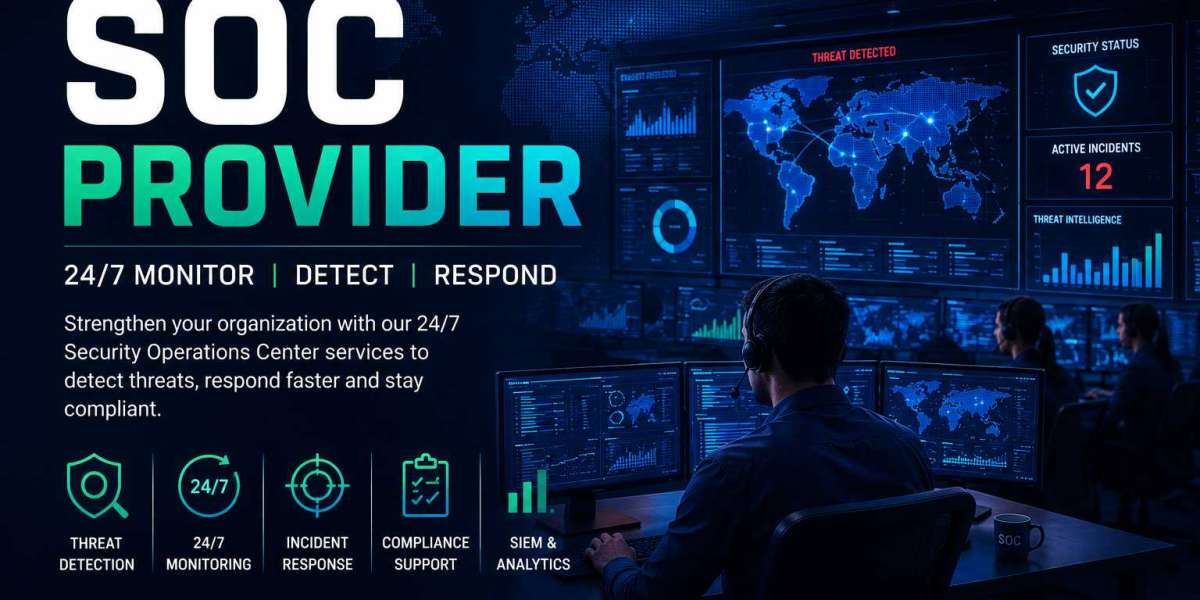
Where ICT Businesses Need SOC Providers to Go Beyond Basic Monitoring
Information and communication technology businesses operate some of the most connected technology environments. Networks, cloud infrastructure, communication platforms, applications, endpoints, data systems, and external integrations often work together to deliver services to customers and business users.
That connectivity creates operational advantages, but it also makes security monitoring more complicated.
A security event in one part of an ICT environment can sometimes be connected to activity somewhere else. A suspicious login, unusual network connection, unexpected configuration change, or abnormal application event may require additional context before its significance can be understood.
This is where soc providers can support ICT organisations.
A Security Operations Center provides a structured approach to monitoring, analysing, investigating, and responding to security activity. Instead of relying on individual teams to examine isolated alerts, the SOC creates a dedicated operational process for identifying activity that may require attention.
For Indian ICT businesses, choosing the right provider is therefore less about selecting another security product and more about finding a service that can work effectively across a changing and interconnected technology environment.
What Top SOC as a Service Providers Should Offer ICT Teams
The phrase top soc as a service providers can lead organisations toward lists and rankings, but ICT businesses need a more practical way to assess providers.
A useful SOC service should be able to support the organisation's actual technology environment and security operating requirements.
This includes understanding what systems need monitoring, how security events are collected and analysed, how suspicious activity is investigated, and how important incidents are escalated.
For ICT organisations, the service should also account for changes in infrastructure.
Networks evolve. Cloud resources are added. Applications are updated. New endpoints are introduced. Communication platforms and external integrations change.
A SOC service needs processes that allow monitoring coverage to evolve with these changes.
The objective is not simply to receive more alerts. It is to establish a security operation that turns relevant information into actionable findings.
Why ICT Environments Are Difficult to Monitor
An ICT organisation may have several technology layers operating simultaneously.
Network infrastructure can connect users and systems. Applications can support customer or internal services. Cloud environments can host workloads and data. Endpoints can connect employees to business systems.
Each layer may produce different security information.
When these signals remain isolated, security teams may struggle to understand whether separate events are related.
Consider an unusual login to an administrative account.
On its own, the event may require investigation but may not establish that an incident has occurred.
If the same account subsequently performs unexpected network activity or accesses a system outside its normal responsibilities, the combined information may become more significant.
A SOC can help bring these events together and provide a process for investigating the wider context.
Why Traditional IT Monitoring Is Not the Same as Security Monitoring
ICT organisations often have strong infrastructure monitoring.
Teams may already monitor network availability, system performance, application uptime, bandwidth, and other operational indicators.
These capabilities are important, but security monitoring has a different purpose.
Performance monitoring asks whether a system is functioning correctly.
Security monitoring asks whether the activity occurring within or around that system is expected and safe.
An application may be operating normally from a performance perspective while an account connected to it is behaving suspiciously.
A network may have normal availability while unusual traffic patterns require security investigation.
This difference means that operational monitoring alone cannot replace a dedicated security operations process.
How a SOC Fits Into an ICT Operating Model
A SOC should complement existing ICT operations rather than operate separately from them.
The provider can monitor relevant security events and investigate suspicious activity. Internal teams can continue managing infrastructure, applications, networks, and business technology.
When a security event requires action, the SOC can follow an agreed escalation process.
This creates a connection between security operations and the teams responsible for the affected systems.
The division of responsibilities needs to be clearly established.
For example, the SOC may be responsible for detecting and investigating an event, while the internal ICT team may be responsible for making infrastructure changes or taking system-level action.
The exact model depends on the organisation and its service agreement.
What ICT Businesses Should Examine Before Choosing a Provider
A provider's technology stack is only one part of the evaluation.
ICT businesses should first understand what they expect the SOC to accomplish.
Monitoring scope is a good starting point.
Organisations should identify their critical applications, network environments, endpoints, cloud infrastructure, and other relevant systems.
They should then examine the provider's detection and investigation processes.
How are alerts prioritised?
How are suspicious events investigated?
How does the provider distinguish routine activity from events requiring escalation?
Response should also be considered.
A provider should clearly explain how serious incidents are communicated and which response activities are included.
Reporting is another important consideration.
ICT security teams need enough detail to investigate incidents, while management may need a concise view of significant activity and security trends.
ICT SOC Provider Evaluation Checklist
- Identify critical ICT infrastructure that requires monitoring.
- Define security event sources that should feed into the SOC.
- Confirm coverage across relevant network environments.
- Review cloud and hybrid monitoring capabilities.
- Understand alert prioritisation and investigation processes.
- Establish incident escalation procedures.
- Clarify provider and internal ICT responsibilities.
- Review security reporting requirements.
- Determine how monitoring coverage changes when new systems are introduced.
- Establish a regular review of the SOC service and its coverage.
SIEM Provides Context Across Connected Systems
SIEM technology can help ICT organisations centralise security information from multiple sources.
This can include relevant logs and events from network infrastructure, endpoints, applications, cloud environments, and other systems.
Centralised analysis can make relationships between events easier to identify.
For example, an authentication event can be considered alongside endpoint or network activity. A suspicious application event can be investigated together with other related security information.
This can provide more context for security analysts.
But SIEM should not be viewed as a complete substitute for a SOC.
The technology supports collection, analysis, and correlation. The SOC provides the operational process around that information.
People and procedures remain important for investigation, prioritisation, escalation, communication, and response.
Continuous Monitoring Can Improve ICT Security Visibility
ICT environments can remain active outside conventional business hours.
Network infrastructure, cloud applications, communication services, and other technology platforms may operate continuously.
Security monitoring therefore needs to account for activity that can occur at any time.
Continuous monitoring creates an ongoing process for reviewing relevant security events.
The purpose is not to treat every event as a potential incident.
Instead, security operations should prioritise events based on their characteristics and available context.
This helps teams focus their attention on activity that warrants investigation.
For ICT businesses, this can provide greater visibility without requiring internal infrastructure teams to manually review every security event.
Incident Escalation Should Be Clear
Security monitoring has limited value if there is no defined process for what happens after an important event is identified.
ICT businesses should establish escalation procedures before a serious incident occurs.
The SOC may investigate an event and determine that it requires internal attention.
The appropriate ICT or security team then needs to know what information has been identified, why the event was escalated, and what action may be required.
Communication channels should be defined.
The organisation should also understand which actions the SOC can perform and which actions require internal approval or intervention.
Clear escalation reduces uncertainty and helps different teams work from the same information.
Supporting Security Governance in Indian ICT Organisations
Security monitoring can contribute to broader security governance, but the requirements differ between organisations.
An ICT business may have contractual obligations, customer security requirements, internal policies, applicable regulations, or recognised security standards that influence its monitoring approach.
A SOC can support these responsibilities by providing security event visibility, monitoring records, reporting, and incident-related information.
However, implementing a SOC does not automatically satisfy every governance or compliance requirement.
ICT organisations should identify their specific obligations and then determine how the SOC can support them.
This approach keeps security operations connected to actual business requirements rather than treating compliance as a generic feature of a service.
A SOC Should Adapt as ICT Infrastructure Changes
Technology environments are continuously changing.
An ICT business may introduce a new cloud platform, expand its network, deploy a new application, integrate a third-party service, or add new endpoints.
Each change can create new security monitoring requirements.
If the SOC continues monitoring only the original environment, security visibility can become incomplete.
This is why monitoring coverage should be reviewed after significant infrastructure changes.
A scalable security operation should make it possible to incorporate new systems and adjust monitoring requirements as the organisation develops.
Measuring the Operational Value of a SOC
ICT businesses should look beyond the number of alerts generated by a SOC.
More useful questions include whether the organisation has better visibility into security activity, whether important events are investigated consistently, whether escalation responsibilities are understood, and whether internal teams receive useful security information.
Reporting can help organisations review these areas.
The purpose of reporting should be to support decision-making and security operations rather than simply produce a high volume of technical information.
A mature SOC relationship should help the organisation understand how its security monitoring is functioning and where operational improvements may be required.
Making SOC Selection a Business Decision
Choosing a SOC provider is ultimately about operational fit.
ICT businesses need to consider their technology architecture, monitoring requirements, internal capabilities, incident response processes, reporting needs, and plans for future growth.
Top soc as a service providers should therefore not be assessed simply through marketing claims or feature lists. The more meaningful comparison is how well a provider's operating model matches the organisation's actual security requirements.
For Indian ICT businesses, soc providers can offer valuable security operations support when their services are aligned with the complexity of the environment.
The goal should be a security operation that can monitor relevant activity, provide useful context, investigate potential threats, communicate important findings, and support response when required.
As ICT environments continue to expand across networks, cloud platforms, applications, and connected systems, a structured SOC can help businesses maintain security visibility without placing the entire monitoring burden on internal technology teams.
Contact Us:
IND- 02067680404
IBN Technologies Ltd.
E-mail: - sales@ibntech.com