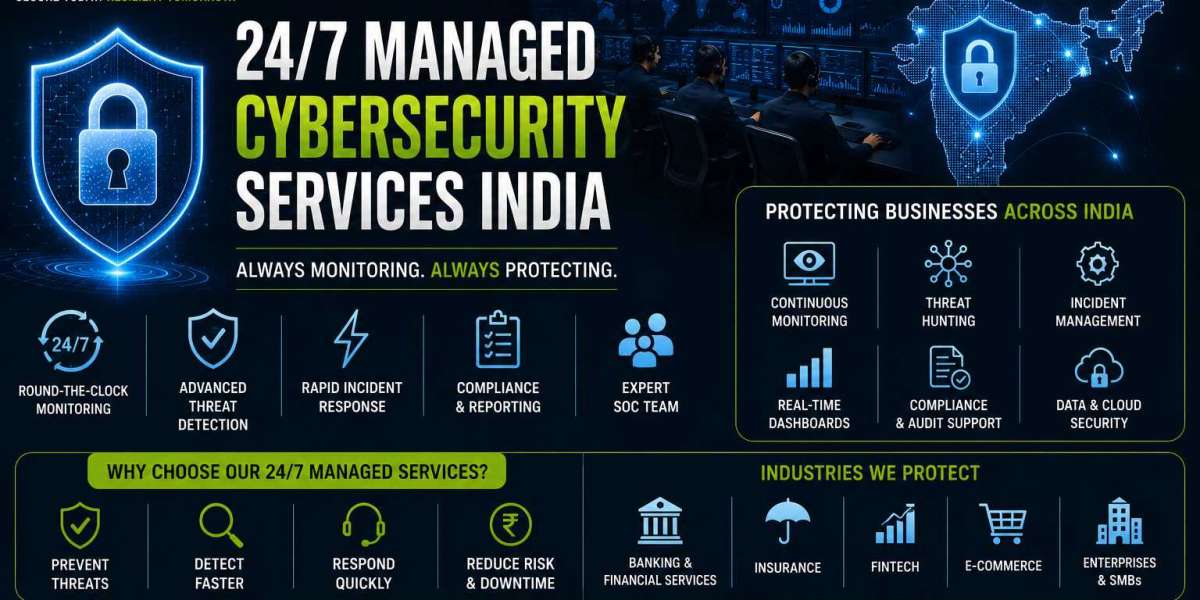
Rethinking ICT Security With 24/7 Managed Cybersecurity Services India
How 24/7 Managed Cybersecurity Services India Compare With An Internal SOC
24/7 managed cybersecurity services india give ICT organizations an alternative to building every security operations capability internally. Instead of relying only on an in house team, an organization can use a managed model for continuous monitoring, alert analysis, threat detection, investigation, and incident escalation.
For ICT companies, the decision is rarely about technology alone. Telecom operations, managed networks, cloud platforms, software environments, customer infrastructure, remote employees, and interconnected services can create a security environment that requires consistent attention.
What Makes The In House And Managed SOC Models Different?
An internal SOC places security operations largely under the organization's direct management. A managed model transfers defined monitoring and operational responsibilities to an external security team while internal leaders retain control over governance, risk decisions, technology priorities, and authorized response.
For organizations comparing soc provider companies vs in house SOC for ICT firms in India, the most useful approach is to examine responsibilities rather than simply comparing service prices.
What Are The Main Differences Between SOC Provider Companies Vs In House SOC For ICT Firms In India?
The main difference is where day to day security operations are performed and managed. An internal SOC depends on the organization's own people, processes, technologies, and operating schedules, while a managed SOC uses an external team for agreed security functions.
Area | In House SOC | Managed SOC |
Staffing | Internal security personnel | External security operations team |
Technology management | Owned and administered internally | Managed according to service scope |
Monitoring | Internal operating model | External monitoring operation |
Escalation | Internal security hierarchy | Agreed provider and internal workflow |
Governance | Directly controlled internally | Retained by the customer |
Scaling | Requires internal resource planning | Adjusted through service scope |
Neither model automatically fits every organization. The decision should reflect security maturity, operational complexity, available skills, risk requirements, and business priorities.
Why Is The Choice Important For ICT Organizations?
Service continuity: ICT businesses often support technology that other organizations depend on. Security incidents can therefore affect internal systems as well as customer-facing services.
Complex infrastructure: Networks, cloud platforms, applications, endpoints, identity systems, and managed environments can generate large amounts of security information.
Customer obligations: ICT organizations may need to demonstrate appropriate security practices to customers, partners, and internal stakeholders.
Specialist demand: Security operations require skills in SIEM, log analysis, threat detection, incident investigation, and response coordination.
A security operating model should account for these realities instead of treating monitoring as an isolated IT task.
Can SOC Provider Companies Vs In House SOC For ICT Firms In India Change Staffing Requirements?
Yes. An internal SOC requires the organization to plan recruitment, coverage, training, retention, operational procedures, and management responsibilities around its security function. A managed approach can move some of those operational requirements into an external service arrangement.
However, outsourcing does not eliminate internal accountability. ICT leaders still need people who understand business risk, approve important actions, manage technology decisions, and coordinate security with broader operations.
Where Does An In House SOC Have A Natural Advantage?
Direct control: Internal teams can make security operations closely aligned with organizational priorities and internal processes.
Business familiarity: Employees working within the organization may already understand its applications, infrastructure, customers, and operational dependencies.
Immediate collaboration: Security analysts can work directly with infrastructure, application, network, and engineering teams.
Customization: Internal teams can develop processes specifically around the organization's technology environment.
These advantages can be valuable when an ICT organization has the resources and security maturity to maintain a dedicated operation.
Where Can A Managed SOC Add Operational Capacity?
Continuous monitoring: A managed model can provide an external monitoring function for agreed systems and security events.
Specialist operations: Security analysts can investigate alerts and provide additional expertise around security event analysis.
Defined escalation: The organization and provider can establish procedures for communicating significant security events.
Flexible scope: Monitoring can be structured around the systems and services that matter most to the organization.
The value comes from creating a clear operating relationship. A managed SOC should complement internal technology teams rather than create uncertainty about who owns an incident.
How Should ICT Leaders Decide Between The Two Models?
What Should ICT Firms Ask About SOC Provider Companies Vs In House SOC For ICT Firms In India?
ICT leaders should begin by mapping their current capabilities. The right questions involve people, technology, processes, coverage, response responsibilities, and future requirements.
Current capability: Determine what the internal team already monitors and where security coverage is limited.
Technical environment: Map networks, cloud services, endpoints, applications, identity systems, and customer-facing infrastructure.
Security workload: Review how much time internal personnel spend on alert investigation, SIEM administration, reporting, and incident handling.
Response authority: Establish which security actions can be performed externally and which require internal approval.
Communication: Define escalation contacts and procedures before a serious incident occurs.
Future growth: Consider whether new customers, services, locations, applications, or cloud workloads will increase monitoring requirements.
This assessment makes the comparison more practical because it connects the operating model to actual business requirements.
What Happens When An ICT Company Has No Clear Monitoring Ownership?
Alert gaps: Important security events may not receive timely attention when responsibilities are unclear.
Duplicate effort: Different teams may investigate the same activity without coordinating their findings.
Delayed escalation: Employees may hesitate to act because they are unsure who has authority during an incident.
Incomplete visibility: Security teams may focus on individual systems without understanding activity across the wider environment.
Response confusion: Technical teams can lose valuable time determining who should contain, investigate, communicate, or recover.
Clear ownership is essential regardless of whether the SOC is internal or managed.
How Can Managed Security Work With Existing ICT Operations?
A managed SOC does not need to replace network operations, infrastructure teams, application support, or internal security leadership. It can operate alongside these functions through defined workflows.
For example, a security analyst may identify suspicious activity involving a privileged account. The SOC can investigate related events and escalate the finding, while the ICT organization's authorized administrator handles account restrictions or other approved remediation actions.
This division allows security monitoring and technology operations to work together without confusing responsibilities.
Is A Managed Model Suitable For ICT Companies In India?
It can be appropriate when an ICT organization wants continuous security monitoring without establishing every element of an internal SOC. It can also support an established security team that needs additional operational capacity.
The decision should consider the organization's systems, internal skills, security objectives, customer commitments, and incident response arrangements.
What Compliance Factors Should ICT Leaders Consider?
Data protection: Organizations handling personal information should consider applicable obligations under India's Digital Personal Data Protection framework.
Incident readiness: Applicable CERT-In requirements may affect how certain organizations prepare for and handle cybersecurity incidents.
Security management: ISO 27001 practices can provide a broader framework for information security governance, risk management, access control, monitoring, and incident response where relevant.
Customer requirements: ICT providers may also need to meet security expectations defined through contracts, service agreements, or customer governance processes.
Compliance is not created by outsourcing alone. A managed security service should fit into the organization's wider governance and control environment.
FAQs
Is An Internal SOC Better Than A Managed SOC For ICT Businesses?
The answer depends on the organization's requirements and resources. An internal SOC provides direct operational control, while a managed model can provide external monitoring capacity and specialist security operations under an agreed scope.
Can A Managed SOC Work With An Existing Network Operations Team?
Yes. A managed SOC can coordinate with network, infrastructure, cloud, application, and service management teams through defined escalation and response procedures.
What Should An ICT Company Review Before Outsourcing Security Monitoring?
It should review monitoring coverage, technology integration, analyst responsibilities, escalation procedures, response authority, reporting, data handling, and the organization's retained governance responsibilities.
Contact Us:
IND- 02067680404
IBN Technologies Ltd.
E-mail: - sales@ibntech.com