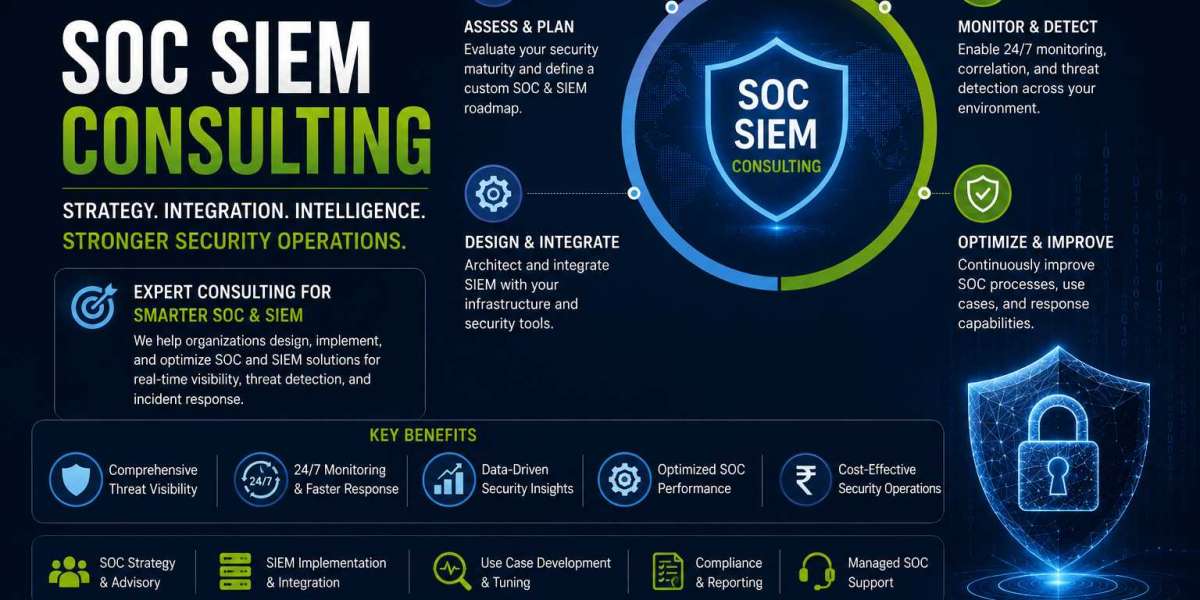
Understanding SOC SIEM Consulting Across Indian ICT Operations
For Indian ICT organizations, soc siem consulting provides a structured approach to connecting SIEM technology with security monitoring, threat investigation and incident response. It helps technology leaders understand which data sources matter, how security alerts should be handled and how SOC processes can fit complex network, cloud, communication and infrastructure environments.
Why ICT environments need coordinated security operations
Infrastructure diversity: ICT organizations can manage networks, communication platforms, cloud workloads, customer portals and enterprise systems simultaneously. Each environment can produce security events that become more meaningful when analyzed together.
Operational dependency: Network and technology services often need to remain available continuously. Security teams therefore need procedures that identify threats without creating unnecessary disruption to legitimate operations.
Distributed visibility: Security information can exist across firewalls, endpoints, identity platforms, servers, applications and cloud services. A fragmented monitoring model makes it harder to understand relationships between events.
Response complexity: An incident involving privileged access may require network, infrastructure, security and application teams to coordinate. A clear SOC structure gives each team a defined role.
How consulting connects SIEM and SOC functions
SIEM collects and correlates security data from different technology sources. SOC operations use that information to identify suspicious activity, investigate alerts and coordinate appropriate escalation.
Organizations evaluating soc as a service providers for ICT companies in India should therefore look beyond the SIEM platform itself. The operating process around the technology is equally important.
A practical consulting exercise can examine the current environment, identify critical data sources, define detection priorities and establish procedures for investigation and escalation.
What the consulting process should examine
Technology landscape: Begin with network infrastructure, cloud services, endpoints, applications, identity systems and security controls. Understanding the environment helps determine what the SOC actually needs to monitor.
Security data: Not every available log has the same investigative value. Consulting should identify which events provide useful context during threat analysis.
Alert logic: Detection rules need to reflect the organization's environment. Rules that generate excessive low-value alerts can make it harder for analysts to focus on meaningful activity.
Incident workflow: Define how an event moves from detection to investigation, escalation and remediation. Each transition should have a clear owner.
Management visibility: Security leaders need reporting that explains significant events and operational trends without overwhelming them with raw technical information.
What should soc as a service providers for ICT companies in India deliver?
They should provide an operating model that connects monitoring, investigation and escalation with the ICT company's existing technology environment. The precise service scope should be agreed according to the organization's systems, security requirements and internal responsibilities.
Important areas to clarify include:
- Monitored infrastructure.
- SIEM integration.
- Alert investigation.
- Threat detection.
- Incident escalation.
- Reporting.
- Service responsibilities.
- Change management.
A closer look at the SOC workflow
A security event normally begins as telemetry from a monitored system. The SIEM can correlate related events and make them available for analysis.
The SOC then determines whether the activity appears routine, suspicious or potentially malicious. If investigation identifies a significant security concern, the event is escalated according to predefined procedures.
This workflow matters because technology does not automatically provide business context. An unusual login may be legitimate maintenance, while the same login combined with unexpected privilege use and system access may warrant investigation.
When ICT teams outgrow basic monitoring
Alert accumulation: Security products can produce large numbers of notifications. Without structured analysis, internal teams can spend excessive time reviewing events that do not require action.
Skill concentration: ICT teams may have excellent network and infrastructure expertise without maintaining dedicated security investigation capabilities. SOC operations require specialized analytical processes.
After-hours exposure: Security events can happen when core infrastructure teams are unavailable. A defined monitoring model helps establish who reviews and escalates significant activity.
Change frequency: Cloud deployments, new services and infrastructure migrations can quickly alter the security environment. Monitoring must adapt as the technology estate changes.
Building a practical SOC model
Map critical services: Identify infrastructure where compromise could affect customers, connectivity, business operations or sensitive information.
Prioritize identity: Authentication and privileged access events often provide valuable context when investigating suspicious activity.
Correlate intelligently: Combine relevant events across systems rather than treating each security notification as an isolated incident.
Define escalation levels: Establish which events require immediate attention and which can be investigated through routine processes.
Document handoffs: Security teams should know when infrastructure, network, application or management teams become responsible for the next action.
How can Indian ICT companies use soc as a service providers for ICT companies in India effectively?
The model works best when the provider's responsibilities are aligned with internal ICT operations from the beginning. The organization should define critical systems, monitoring boundaries, escalation procedures and remediation ownership before service operations begin.
A clear operating model also makes it easier to review the SOC when infrastructure changes.
An ICT security scenario
Imagine an ICT company operating a managed network environment and several cloud applications. A service account begins making authentication requests that differ from its established pattern.
The initial event may not prove that an incident has occurred. A SOC can examine related authentication, endpoint, network and application events to determine whether the activity has a legitimate operational explanation.
If the investigation identifies a potential compromise, the SOC can escalate the finding to the appropriate technical team. That team can then take authorized remediation steps while the security investigation remains documented.
India-specific considerations for ICT security
Regulatory alignment: ICT organizations operating in India should consider applicable cybersecurity, data protection and incident-handling obligations when designing SOC processes. Requirements can differ according to the organization's services and role in the technology ecosystem.
Customer contracts: ICT companies serving enterprise customers may also need to demonstrate defined security controls, incident procedures and monitoring capabilities.
Hybrid infrastructure: Indian ICT environments can combine local infrastructure, private cloud and public cloud services. SOC design should reflect this mixed architecture rather than assume a single technology environment.
FAQ
Does SOC SIEM consulting require a new SIEM platform?
Not always. The existing SIEM and security technologies should first be assessed to determine whether they can support the organization's required monitoring and investigation model.
Can network operations and SOC teams work together?
Yes. Network operations can retain infrastructure responsibility while the SOC focuses on security analysis and escalation. Clearly defined handoffs help prevent duplicated or missed responsibilities.
How often should an ICT company's SOC model be reviewed?
The model should be reviewed when major infrastructure, application or cloud changes occur. Regular operational reviews can also identify monitoring gaps, unnecessary alerts and changes in responsibility.
IBN Technologies provides SOC and SIEM capabilities that can support organizations building structured security monitoring and incident response operations.
Contact Us
IBN Technologies
Phone: +91 20 6768 0404
Email: sales@ibntech.com