The Bionics Market is expanding as advancements in biomedical engineering, robotics, artificial intelligence, and medical technology improve the development of artificial organs, prosthetic limbs, and implantable devices. Bionics combines biological principles with electronic and mechanical systems to restore or support human body functions.
Bionics Market Overview
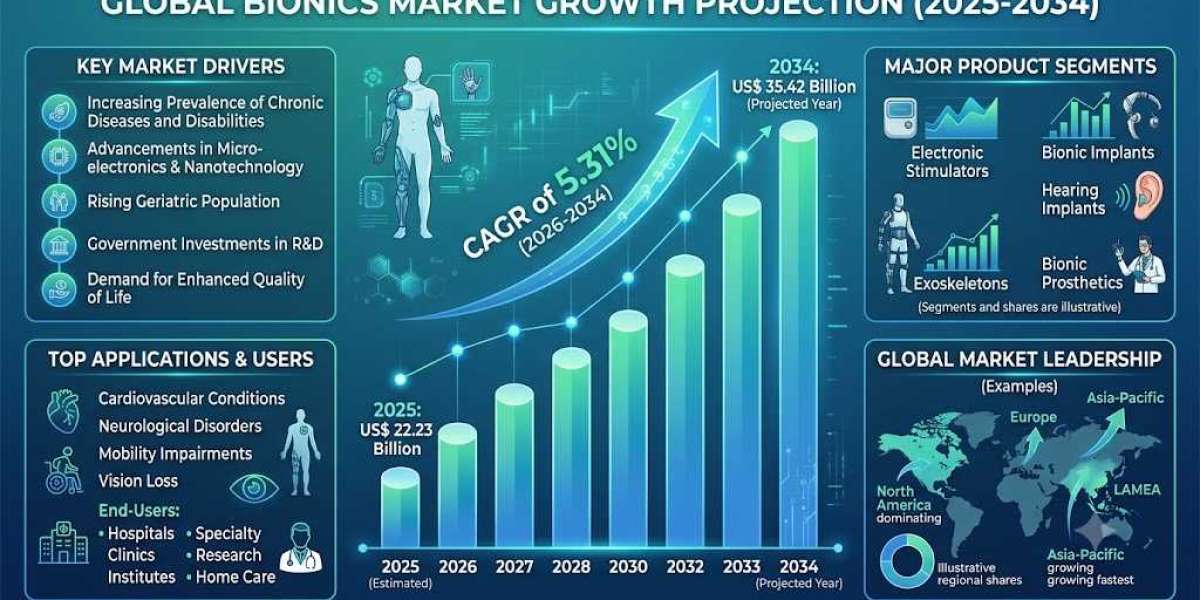
Bionics market size is expected to reach US$ 35.42 Billion by 2034 from US$ 22.23 Billion in 2025. The market is anticipated to register a CAGR of 5.31% during the forecast period 2026–2034.These technologies are increasingly used to assist individuals experiencing limb loss, hearing impairment, and mobility limitations. Growing demand for advanced rehabilitation solutions and improved quality of life is supporting market development.
Download Sample PDF: https://www.theinsightpartners.com/sample/TIPRE00002884
Key Market Drivers
Rising Demand for Advanced Prosthetics
Increasing demand for prosthetic devices is a major factor driving the bionics market. Modern bionic arms and legs incorporate sensors, microprocessors, and powered components that support improved movement and control. These devices can help eligible users perform daily activities and enhance independence. Continuous improvements in device comfort, durability, and customization are encouraging adoption across healthcare and rehabilitation settings.
Increasing Prevalence of Sensory and Mobility Disorders
The need for technologies that address hearing loss, limb loss, and mobility challenges is supporting market growth. Cochlear implants are an established bionic technology for eligible individuals with certain types of severe hearing impairment. Advanced prosthetic limbs and assistive robotic systems can also support rehabilitation. Greater awareness of these technologies and improvements in specialized healthcare services are creating additional opportunities.
Technological Advancements in the Bionics Market
Artificial Intelligence and Smart Devices
Artificial intelligence and machine learning are being explored to improve bionic device functionality. Smart sensors and control systems can interpret movement patterns and adjust device responses to user activity. These developments may improve the precision and adaptability of prosthetic limbs while supporting more personalized user experiences.
Neural Interfaces and Advanced Materials
Neural interfaces aim to translate signals from muscles, nerves, or the brain into commands for external or implanted devices. Research in this area may enable more intuitive control and, in some systems, sensory feedback. Meanwhile, lightweight composites and biocompatible materials are helping improve device comfort, durability, and suitability for specific medical applications.
Bionics Market Trends and Growth Analysis
Growing Adoption of Powered Prosthetic Limbs
Powered prosthetic limbs are an important segment of the bionics industry. These devices use electronic sensors and mechanical components to support movement and selected functions. Manufacturers are focusing on better battery performance, intuitive controls, and personalized fitting to improve usability. Advances in rehabilitation training are also helping users adapt to advanced prosthetic technologies.
Expansion of Sensory Bionics
Sensory bionics includes technologies designed to support hearing and investigate vision restoration. Cochlear implants have established clinical applications, while visual prostheses continue to be developed or studied for selected forms of severe vision impairment. Improvements in electronic stimulation and signal processing are supporting innovation, although clinical outcomes and device availability vary by technology.
Bionics Market Regional Analysis
North America
North America is an important region for the bionics market due to its established healthcare infrastructure, medical device industry, and biomedical research capabilities. Investment in advanced prosthetics, implantable devices, and rehabilitation technologies is supporting innovation. Collaboration among research institutions, manufacturers, and healthcare providers is contributing to the development of new solutions.
Europe
Europe benefits from established healthcare systems, specialized rehabilitation services, and medical technology research. Development of prosthetic limbs, cochlear implants, and assistive devices is supporting regional activity. Market adoption varies according to healthcare funding, reimbursement policies, and access to specialist services.
Asia-Pacific
The Asia-Pacific region presents growth opportunities as healthcare infrastructure and investment in medical technology expand. Countries such as Japan, China, South Korea, and India are developing capabilities in robotics, electronics, and biomedical engineering. Increasing awareness of rehabilitation technologies may support demand, although affordability and access to specialist care remain important considerations.
Key Companies in the Bionics Market
Major companies operating in relevant bionics segments include:
Boston Scientific Corporation
BionX Medical Technologies, Inc.
Cochlear Ltd.
Edward Lifesciences Corporation
Ekso Bionics Holdings, Inc.
LifeNet Health, Inc.
Medtronic Plc.
Ossur
Second Sight Medical Products, Inc.
St. Jude Medical, Inc
These companies participate in areas such as prosthetics, implantable hearing systems, medical devices, and rehabilitation robotics. Competitive strategies include product innovation, improved functionality, clinical collaboration, and enhanced user support.
Future Outlook
The bionics market is expected to benefit from continued progress in artificial intelligence, neural interfaces, robotics, and biocompatible materials. These technologies may improve device control, personalization, and functionality. Growing demand for rehabilitation solutions and assistive medical technologies is likely to create further opportunities. However, long-term growth will depend on clinical evidence, affordability, regulatory approvals, and access to specialized care.
Related Reports
Biobanking Technology Market Size, Trends Demand by 2034
DNA Microarray for Agriculture Market Trends, Demand Growth by 2034
About US
The Insight Partners provides comprehensive syndicated and tailored market research services across the healthcare, technology, and industrial sectors. The company delivers market intelligence and strategic insights to help organizations understand emerging trends, identify growth opportunities, and make informed business decisions in rapidly evolving markets.
Contact Us
Contact Person: Ankit Mathur
E-mail: ankit.mathur@theinsightpartners.com
Also Available in : Korean German Japanese French Chinese Italian Spanish