
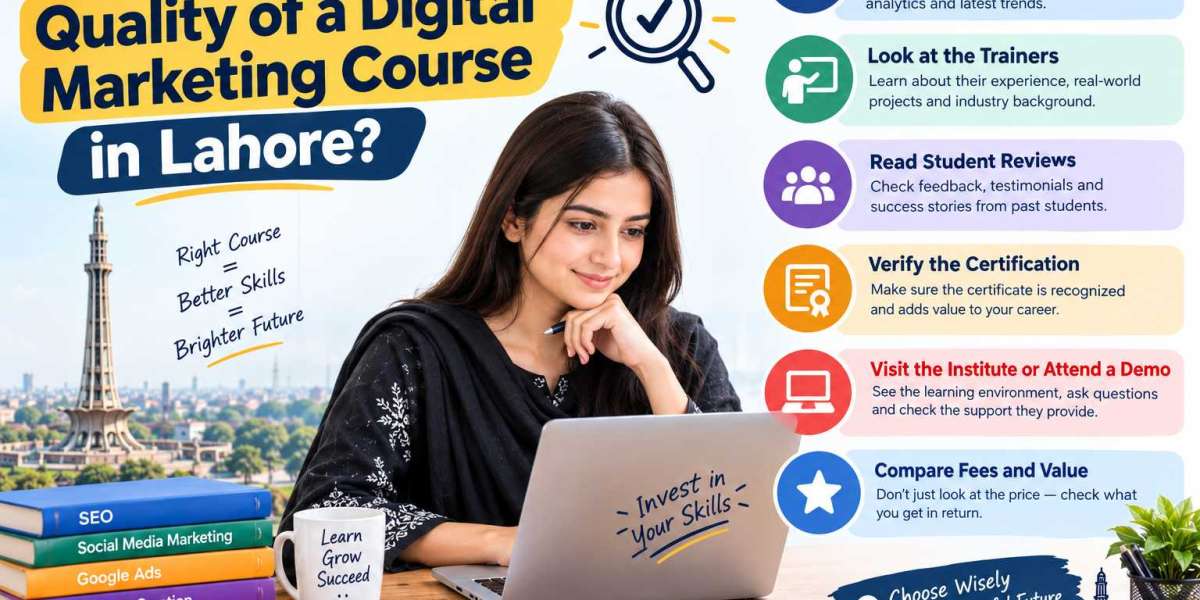
Search for a digital marketing course in Lahore and you will find dozens of options. Every institute promises job-ready skills, expert trainers, and guaranteed success. Some deliver on those promises. Others deliver a stack of slides and a certificate that employers ignore.
So how can you tell the difference before you spend your money? This guide gives you a practical checklist for verifying the quality of a digital marketing course in Lahore, plus the red flags that should make you walk away.
Why Verifying Quality Matters
Digital marketing changes fast. Platforms update their algorithms, new tools appear, and strategies that worked last year may fall flat today. A weak course wastes your time and fees, and worse, it can leave you with outdated skills and false confidence.
A little research before enrolling can save you months of frustration.
Step 1: Review the Curriculum in Detail
The syllabus is the first thing to check. Ask for the full course outline, not just a list of headings. A quality digital marketing course in Lahore should cover:
- Search engine optimization (SEO)
- Social media marketing
- Google Ads and Meta Ads
- Content marketing and copywriting
- Email marketing and automation
- Web analytics, including Google Analytics 4
- AI tools for marketing
- Basic website and landing page skills
- Freelancing or agency fundamentals
Check how much time is given to each topic. A course that squeezes ten subjects into a few sessions is unlikely to teach any of them well. Also look at when the syllabus was last updated. If it still focuses on outdated tactics, move on.
Step 2: Investigate the Trainers
Your instructor matters more than the building, the brand name, or the brochure. Ask these questions:
- Does the trainer actively work in digital marketing, or only teach?
- Can they show real campaigns, client results, or case studies?
- Do they have a visible professional presence, such as a LinkedIn profile, portfolio, or agency?
- Are they certified by platforms like Google or Meta?
Trainers with real industry experience teach what actually works, not just what appears in textbooks. If an institute is vague about who will teach you, that is a warning sign.
Step 3: Attend a Demo Class
Many institutes offer a free trial session. Take it. In one class you can judge:
- How clearly the trainer explains concepts
- Whether students are engaged and asking questions
- If the class includes live practice or only theory
- Whether the pace suits your level
If an institute refuses a demo class or pushes you to pay immediately, be cautious.
Step 4: Check for Hands-On Practice
Digital marketing is learned by doing. A quality course should include:
- Live ad campaigns, even with small budgets
- Real website or social media projects
- Keyword research and SEO assignments
- Portfolio-building tasks
- Practice with analytics dashboards
If the course is mostly lectures and slides, you will struggle to apply the skills when you start working.
Step 5: Read Reviews and Talk to Past Students
Online reviews are helpful, but treat them carefully, since some can be edited or incentivized. For a clearer picture:
- Check Google reviews, Facebook pages, and LinkedIn mentions.
- Ask the institute to connect you with former students.
- Look up alumni on LinkedIn and see where they work now.
- Ask students about trainer availability, class quality, and post-course support.
Honest feedback from a few graduates is worth more than any advertisement.
Step 6: Understand the Certification
A certificate alone will not get you hired, but a credible one adds value. Ask:
- Who issues the certificate?
- Is it recognized by employers or tied to a known organization?
- Does the course prepare you for platform certifications such as Google Ads, Google Analytics, or Meta Blueprint?
Be careful with institutes that treat the certificate as the main selling point. Skills and a portfolio matter far more to employers and clients.
Step 7: Ask About Post-Course Support
What happens after the last class? Good institutes offer some combination of:
- Job placement help or internship connections
- Freelancing guidance, including profile setup and finding first clients
- Portfolio and CV reviews
- Access to alumni groups or mentors
- Continued access to recordings and updated material
Be realistic here. Support should mean genuine guidance, not an empty promise.
Step 8: Compare Fees With Value
The cheapest course is not always the best, and the most expensive is not always worth it. Instead of comparing only prices, compare what you actually get:
- Total number of hours and sessions
- Class size and individual attention
- Tools and software access
- Projects and assessments
- Support after completion
Also ask about the refund policy, installment options, and any hidden charges for materials or certification.
Step 9: Verify the Institute Itself
A few simple checks can protect you from scams:
- Visit the institute in person if possible, or request a video tour for online programs.
- Confirm that the address, phone numbers, and social pages are consistent and active.
- Look for registration or affiliation details where applicable.
- Get fee terms and course details in writing before you pay.
Red Flags to Watch Out For
Walk away, or at least ask harder questions, if you notice any of these:
- Guaranteed jobs or income. No honest institute can promise this.
- Unrealistic claims such as becoming an expert in two weeks.
- Pressure tactics like "enroll today or lose the discount."
- No clear syllabus or constant changes in what is offered.
- Anonymous trainers with no verifiable experience.
- No demo class or no way to speak with past students.
- Only fake-looking reviews with generic praise.
- Vague refund terms or reluctance to put things in writing.
Quick Quality Checklist
Before you enroll, make sure you can answer yes to most of these:
- Is the syllabus detailed, current, and inclusive of AI tools?
- Are the trainers experienced and verifiable?
- Did I attend a demo class and like the teaching style?
- Does the course include live projects and practice?
- Have I spoken to at least one past student?
- Is the certification meaningful and clearly explained?
- Is post-course support clearly defined?
- Are the fees, refund policy, and terms clear and in writing?
Final Thoughts
Verifying the quality of a digital marketing course in Lahore takes a bit of effort, but it is one of the best investments you can make before spending your money. Look beyond the advertising, ask direct questions, test the teaching in a demo class, and talk to people who have already taken the course.
The right course will give you current skills, real practice, and the confidence to start your career or freelancing journey. Take your time, compare your options, and choose the program that proves its value, not just promises it.
Frequently Asked Questions
How many institutes should I compare before choosing? Two to four is a good range. Compare syllabi, trainers, demo classes, and fees side by side.
Is a well-known institute always better? Not necessarily. A famous name helps with credibility, but trainer quality and hands-on practice matter more.
Can I trust online reviews? Use them as one source of information, but verify with past students and LinkedIn profiles whenever possible.
Should I pay the full fee upfront? If you are unsure, ask about installments or paying in stages, and always get the payment terms in writing.
How do I know if the course is up to date? Ask when the syllabus was last revised and whether it covers current topics such as AI tools, GA4, and platform automation features.



