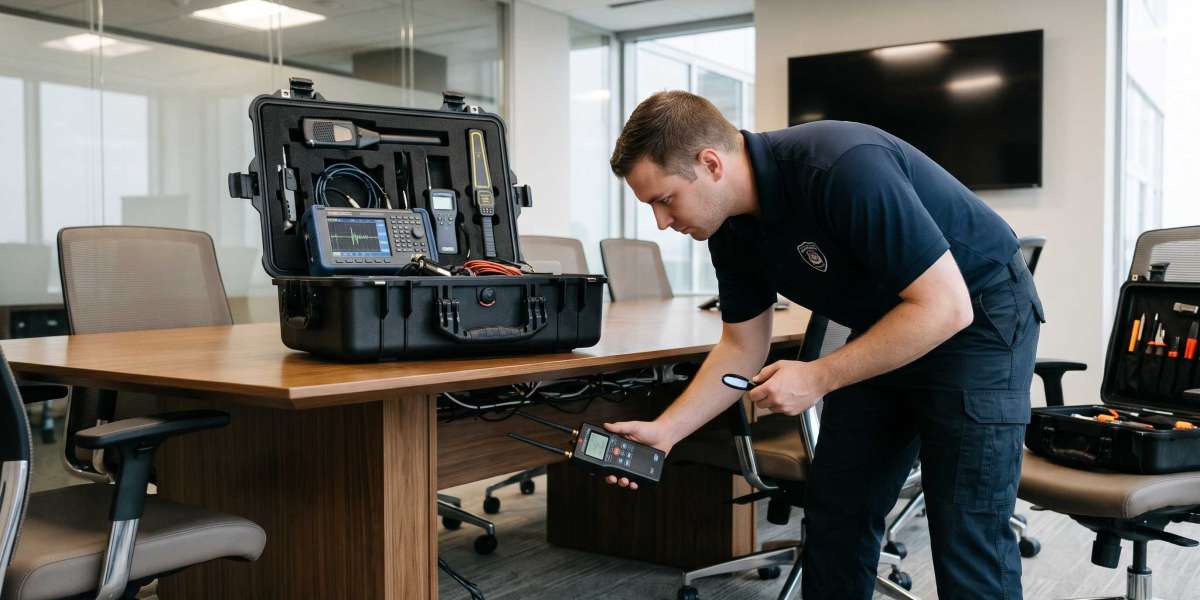
Business conversations often involve confidential information, financial discussions, future strategies, and sensitive client details. However, these conversations can become vulnerable when unauthorized listening devices are placed inside offices, meeting rooms, conference spaces, or other private business areas. A commercial hidden listening detection service helps organizations identify potential audio surveillance threats and protect important discussions from being monitored without permission.
With modern surveillance technology becoming smaller and more advanced, hidden listening devices can be difficult to recognize through a simple visual inspection. Some devices may be installed inside everyday office equipment, electrical fittings, furniture, or other objects. This creates security concerns for businesses that regularly handle confidential information.
Professional Technical Surveillance Countermeasures (TSCM) services are designed to identify and investigate potential electronic surveillance threats. Through specialized inspection methods and technical equipment, trained professionals can help businesses understand their security risks and take appropriate steps to protect their private environments.
Why Businesses Need Protection Against Hidden Listening Devices
Confidential communication is an important part of running a successful business. Companies regularly discuss information that should only be accessible to authorized employees, partners, and stakeholders.
If these conversations are secretly monitored, sensitive information could potentially reach competitors, unauthorized individuals, or other third parties.
Several types of business environments may require additional protection:
Corporate offices handling confidential company information.
Conference rooms used for executive meetings.
Boardrooms where business strategies are discussed.
Legal offices managing sensitive client cases.
Financial institutions handling private financial discussions.
Research facilities protecting confidential projects.
Government and corporate facilities with restricted communication areas.
A hidden listening device can create risks even when there are no obvious signs of unauthorized access. For this reason, businesses should consider professional security assessments rather than relying entirely on visual checks.
What Is a Commercial Hidden Listening Detection Service?
A commercial hidden listening detection service is a professional security solution designed to identify unauthorized audio surveillance equipment within commercial environments.
These services are generally provided by trained TSCM professionals who use specialized equipment and inspection procedures to investigate possible electronic eavesdropping threats.
The purpose is not simply to locate visible microphones. Instead, a professional assessment may involve examining electronic equipment, identifying suspicious signals, inspecting physical spaces, and evaluating potential surveillance vulnerabilities.
Depending on the property and its security requirements, an inspection may include:
Examination of meeting rooms and executive offices.
Assessment of electrical and communication equipment.
Detection and investigation of suspicious radio-frequency transmissions.
Inspection of accessible furniture and office fixtures.
Identification of potentially unauthorized recording equipment.
Technical assessment of possible audio surveillance risks.
The inspection process is designed to provide businesses with a clearer understanding of their security position.
Common Places Where Hidden Listening Devices May Be Found
Hidden audio surveillance equipment can be designed to blend into ordinary surroundings. Its appearance and installation method may vary depending on the device and the environment.
Businesses should pay attention to areas where confidential conversations regularly take place.
1. Conference and Meeting Rooms
Conference rooms are among the most important areas to assess because they are frequently used for private discussions.
Business negotiations, financial planning, partnership agreements, and internal strategies may be discussed in these spaces.
Professional inspections can help identify suspicious electronic equipment or other indicators of unauthorized audio monitoring.
2. Executive Offices
Senior management offices often contain valuable business information. Private conversations about company operations, future investments, employee matters, and business decisions may take place here.
An inspection of executive offices can help identify potential surveillance concerns before they become more serious security issues.
3. Office Furniture and Fixtures
Everyday office objects can sometimes be modified to accommodate recording equipment.
Examples of objects that may deserve attention during a security inspection include:
Desk accessories and decorative items.
Electrical fittings and fixtures.
Communication equipment.
Office appliances.
Unfamiliar electronic devices.
However, an unusual object does not automatically indicate surveillance. Professional assessment is important before drawing conclusions.
4. Shared Business Spaces
Reception areas, shared offices, and collaborative workspaces may also require security attention.
These locations often involve visitors, contractors, employees, and external business partners. Organizations should evaluate whether their existing security procedures adequately protect confidential discussions in these areas.
How Professional TSCM Inspections Help Detect Audio Surveillance
Technical Surveillance Countermeasures (TSCM) involve specialized procedures used to investigate potential surveillance threats.
A professional inspection combines technical equipment, physical assessment, and the experience of trained specialists.
The exact approach depends on the building, inspection objectives, and potential security concerns.
Radio Frequency (RF) Analysis
Some wireless listening devices transmit information through radio-frequency signals.
RF analysis is used to investigate the surrounding radio-frequency environment and identify transmissions that may require further examination.
However, many legitimate electronic devices also produce radio-frequency activity. Therefore, identifying a signal does not automatically confirm the presence of a listening device.
Physical Security Inspection
A physical inspection helps identify suspicious or unauthorized equipment within the assessed environment.
Professionals may examine accessible areas, electronic fixtures, communication equipment, and other relevant objects.
The objective is to identify potential indicators that require additional technical investigation.
Electronic Equipment Assessment
Business environments contain numerous electronic devices, including computers, telephones, wireless communication systems, and meeting room equipment.
An electronic assessment can help identify unusual configurations or equipment that may require further investigation.
Technical Findings and Reporting
A professional TSCM inspection should provide clear findings based on the work performed.
A report may include:
Areas and equipment inspected.
Inspection methods used.
Identified security concerns.
Relevant technical observations.
Recommended corrective actions.
Clear documentation allows business owners and security managers to make informed decisions about their next steps.
Warning Signs That Your Business May Need an Inspection
Hidden listening devices are not always easy to identify. In many situations, there may be no obvious indication that confidential conversations are being monitored.
However, certain circumstances may justify a professional security assessment.
Consider arranging an inspection if:
Confidential business information appears to have been shared without authorization.
Unfamiliar electronic equipment has appeared in restricted areas.
Meeting rooms have experienced unexplained security concerns.
Unauthorized individuals may have accessed private office spaces.
Your company is preparing for sensitive negotiations or acquisitions.
You have experienced a potential information security incident.
Your organization handles commercially sensitive or confidential information.
These circumstances do not necessarily prove that audio surveillance is taking place. They simply provide reasons to review existing security arrangements.
Benefits of Hiring a Professional Hidden Listening Detection Company
Attempting to identify sophisticated surveillance equipment without suitable knowledge and technical resources can produce unreliable results.
Professional TSCM specialists bring experience, inspection procedures, and dedicated equipment to the assessment process.
Here are some important benefits businesses may receive from professional services.
Better Protection for Confidential Business Information
Confidential information is an important business asset. Protecting private conversations can help reduce the risk of unauthorized information exposure.
A professional assessment can help identify potential weaknesses in environments where sensitive discussions take place.
Reduced Corporate Security Risks
Unauthorized surveillance may create risks for business operations, negotiations, and internal decision-making.
By assessing potential vulnerabilities, companies can take practical steps to strengthen their security arrangements.
Professional Technical Assessment
Specialized detection equipment can help identify suspicious electronic activity that may not be visible during an ordinary office inspection.
Results should be interpreted by experienced professionals to reduce false alarms and avoid incorrect conclusions.
Greater Confidence During Important Meetings
Executives and management teams frequently discuss information that should remain confidential.
Regular security assessments can help organizations maintain greater confidence in the privacy of important meeting spaces.
Practical Security Recommendations
A professional TSCM provider can offer recommendations based on the inspection findings.
These may include improving physical access controls, reviewing office equipment, strengthening communication security, and arranging periodic assessments where appropriate.
How to Choose the Right Commercial Listening Detection Provider
Selecting a suitable service provider is an important part of protecting your business environment.
Not every security company has the technical expertise required to conduct a comprehensive TSCM inspection.
Before choosing a provider, consider the following factors:
1. Relevant TSCM Experience
Look for professionals with practical experience in technical surveillance detection and commercial security assessments.
2. Appropriate Technical Equipment
Ask about the equipment and inspection methods used during the assessment. The approach should be suitable for the specific environment and security concerns.
3. Clear Inspection Procedures
A reliable provider should explain what areas will be inspected, what the process involves, and what limitations may apply.
4. Confidentiality and Professionalism
The inspection itself may involve access to sensitive business information. Confidentiality procedures and professional conduct should therefore be treated as essential requirements.
5. Detailed Reporting
Choose a provider that delivers understandable findings and practical recommendations instead of making unsupported claims about surveillance threats.
6. Customized Security Solutions
Different organizations have different security requirements. A corporate boardroom, financial office, and research facility may require different inspection priorities.
A suitable provider should understand these differences before recommending an inspection plan.
How Often Should Businesses Arrange Hidden Listening Detection Inspections?
There is no single inspection schedule that works for every organization. The frequency depends on the nature of the business, the sensitivity of its information, physical security arrangements, and potential threat exposure.
Some companies may benefit from periodic assessments, while others may require inspections before specific high-confidentiality meetings or after a suspected security incident.
Businesses should consider arranging an assessment in situations such as:
Before important mergers and acquisitions.
Following suspicious access to restricted office areas.
Before major executive or boardroom meetings.
After office renovations or significant changes to meeting spaces.
When confidential information has potentially been compromised.
As part of an established corporate security program.
A risk-based inspection schedule allows organizations to focus their resources on the areas that require the greatest protection.
Strengthen Your Business Security with Professional TSCM Services
Protecting business conversations requires more than ordinary office security measures. Organizations must also consider the possibility of unauthorized electronic monitoring, particularly when confidential information is regularly discussed.
A professional commercial hidden listening detection service can help businesses investigate potential audio surveillance threats through technical inspections, electronic assessments, and physical security reviews.
Whether you manage a corporate office, financial institution, legal practice, or executive facility, understanding your surveillance risks is an important part of maintaining information security.
Working with experienced TSCM professionals can help your organization identify potential vulnerabilities, understand inspection findings, and implement appropriate protective measures.
Final Thought
Business confidentiality should never be treated as an optional part of corporate security. Unauthorized listening can expose sensitive discussions and create unnecessary risks for organizations of all sizes. By investing in a professional commercial hidden listening detection service, businesses can take a more proactive approach to protecting private conversations and confidential information. A properly conducted TSCM assessment provides valuable insight into potential security concerns and helps organizations make informed decisions about protecting their workplaces.